Thinking a Chain Link Fence is Just a Chain Link Fence? Think Again.
You'd be surprised how many folks around Moses Lake call us up, ready to get a chain link fence, and they've already got a few misconceptions baked in. It's not just about getting some wire and posts in the ground. There are real differences in materials, installation, and even what you're actually trying to achieve. And if you're not careful, you can end up with a fence that's not quite right, or worse, one that needs fixing way too soon.
Mistake #1: Not Knowing Your Gauge (It Matters More Than You Think)
This is a big one. When I talk to homeowners, a lot of them just say, "I want a chain link fence." But chain link comes in different gauges, and that's basically how thick the wire is. The lower the gauge number, the thicker and stronger the wire. For a typical residential backyard, 11 or 11.5 gauge is pretty common. It's good for keeping pets in and defining boundaries. But if you've got a big dog that likes to test fences, or if you're fencing a commercial property or something that needs more security, you might want 9 gauge. I've seen people go with a lighter gauge to save a few bucks, only to have their fence sag or get damaged easily, especially with our strong winds that can whip through areas like the Cascade Valley neighborhood. Don't cheap out on the gauge if you need durability.
Mistake #2: Ignoring Post Depth and Concrete
This goes hand-in-hand with durability. You can have the strongest chain link fabric in the world, but if your posts aren't set right, your fence isn't going to last. Here in Moses Lake, we can have some pretty varied soil conditions. Sometimes it's nice and sandy, other times you hit some really hard compacted stuff. A good contractor knows how deep those posts need to go and how much concrete is necessary to keep them stable. I've seen DIY jobs where posts are barely sunk a foot or two with a tiny bit of concrete, and after a season or two of our freeze-thaw cycles, those posts are leaning like they've had too much to drink. Insist on proper post depth – usually at least 24-30 inches for a standard 6-foot fence – and a good concrete collar around each post.
Mistake #3: Not Considering the Top Rail
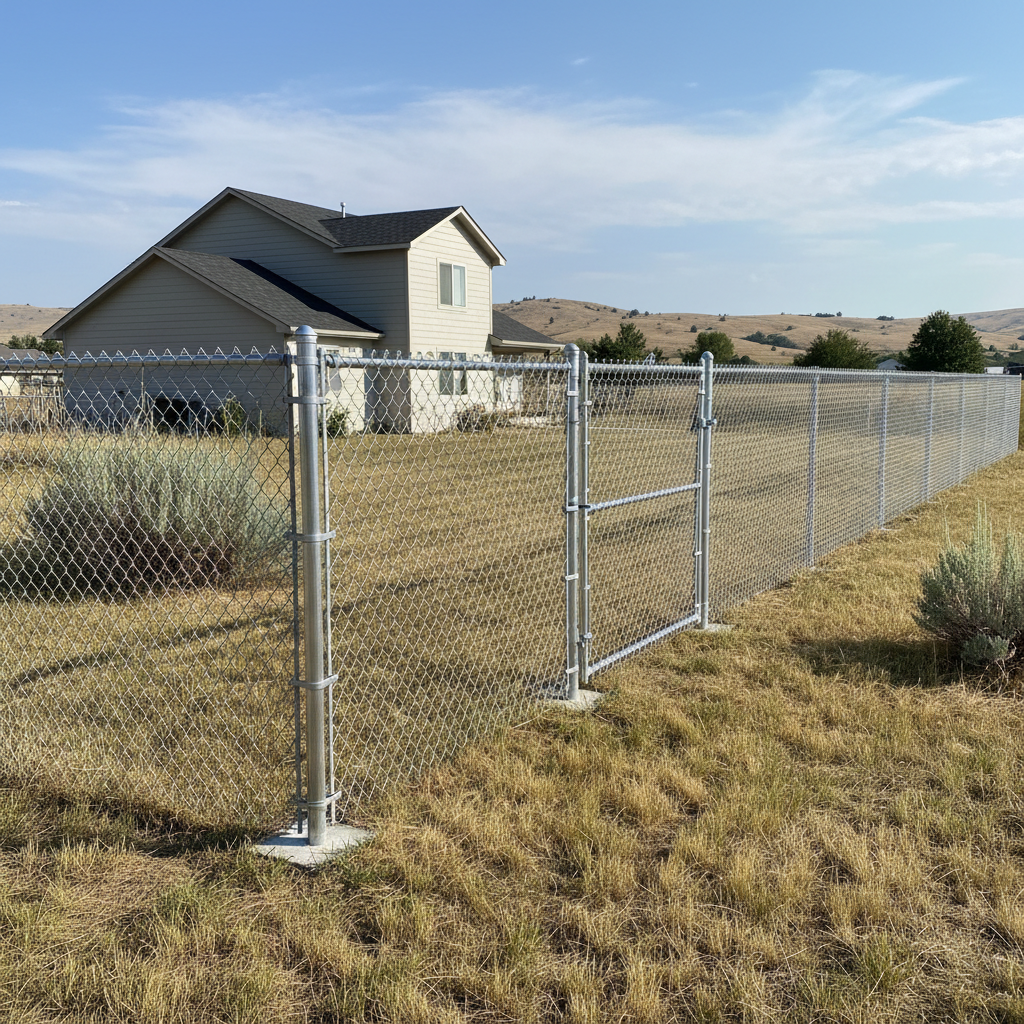
Some folks try to cut costs by skipping the top rail. This is a mistake. The top rail runs horizontally along the top of your fence and connects all the posts. It provides crucial stability and prevents the chain link fabric from sagging between posts. Without it, your fence will look sloppy, and it'll be much weaker. It's also a safety feature, preventing sharp edges of the chain link from being exposed. If a contractor suggests skipping it to save money, that's a red flag. It's a fundamental part of a sturdy chain link fence, and Moses Lake Fencing always includes it in our standard installations.
Mistake #4: Underestimating the Importance of Gates
A gate is probably the most used part of your fence, so it needs to be built to last. Common mistakes here include using flimsy gate hardware, not having enough support posts for wider gates, or not considering the swing direction or clearance. Think about what you'll be moving through that gate. Just people? Or will you need to get a lawnmower, a wheelbarrow, or even a vehicle through? Plan for the right width and make sure the posts supporting the gate are extra strong and set deep. A gate that sags or sticks after a year is a constant annoyance.
Mistake #5: Not Checking for Proper Tensioning
Once the posts are in and the fabric is up, the chain link needs to be properly tensioned. This means pulling it tight so it's taut and doesn't sag. I've seen fences where the installer just stapled or tied it loosely, and it looks terrible and offers little security. A professional will use special tools to stretch the fabric evenly and then secure it with tension bands and tie wires. If your fence looks wavy or loose right after installation, that's a sign it wasn't tensioned correctly, and it's going to get worse over time.
Mistake #6: Forgetting About Property Lines and Utilities
Before any digging starts, you absolutely need to know where your property lines are and where any underground utilities might be. In Moses Lake, like anywhere, hitting a gas line or a water main is a really bad day. Call 811 before you dig – it's free and it's the law. As for property lines, don't just guess. If you build on your neighbor's property, even by a few inches, you could be forced to tear it down. Get a survey if you're not 100% sure. It's a small upfront cost that saves a massive headache.
Get it Right the First Time
Look, a chain link fence is a practical, affordable option for many homes and businesses around here. But like anything, there's a right way and a wrong way to do it. Don't fall into these common traps. Ask questions, understand the materials, and make sure your installer knows what they're doing. It'll save you money and frustration in the long run.