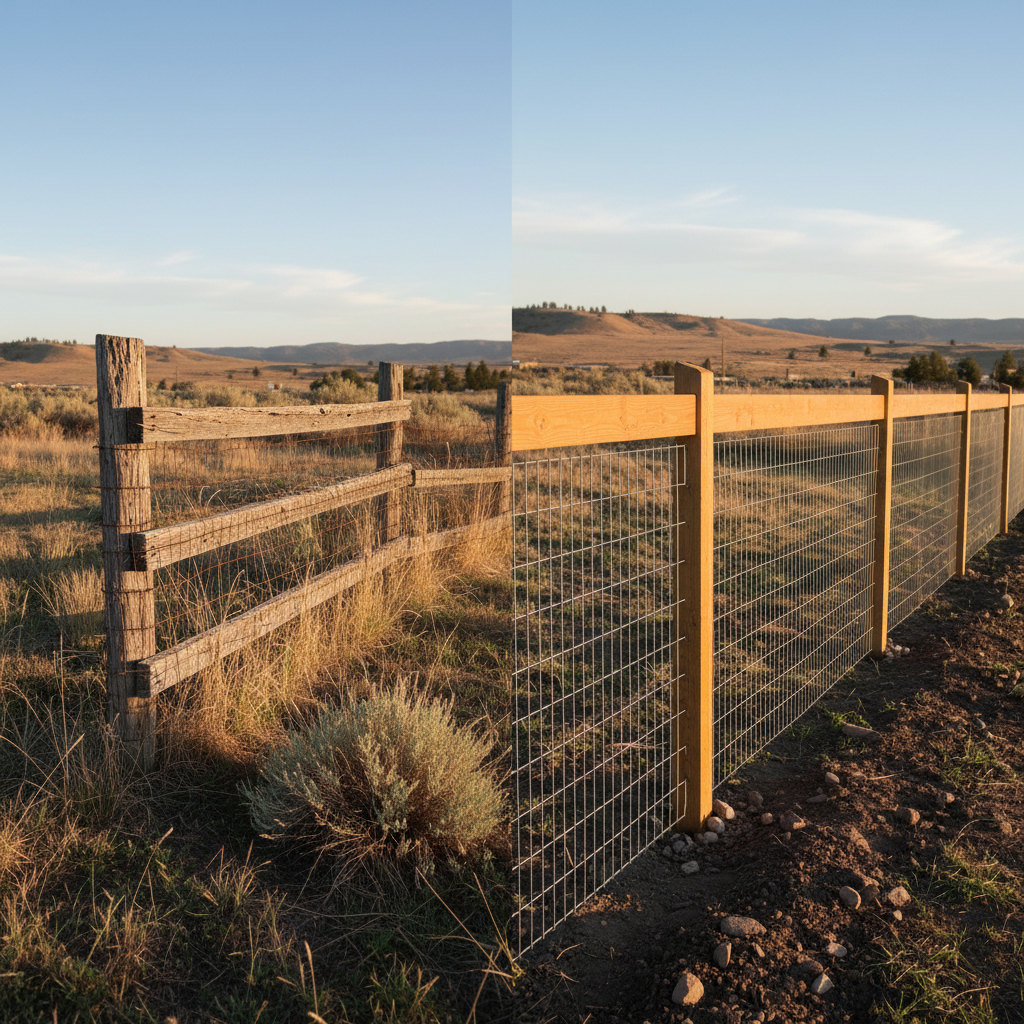
Alright, let's talk farm fences. If you've got livestock, crops, or just a big property out here in Moses Lake that needs a solid boundary, you're probably weighing your options. Two of the most common and effective choices I see folks consider are high-tensile wire and woven wire. Both have their place, but they're definitely not the same, especially when you factor in our local conditions.
High-Tensile Wire: The Modern Workhorse
High-tensile wire fencing is exactly what it sounds like: thin, strong steel wire, pulled incredibly tight. Think of it as a series of guitar strings stretched across your property. It's often electrified, which really boosts its effectiveness for containing animals like cattle, horses, or even keeping out deer.
Cost & Installation
Upfront, high-tensile is usually cheaper per linear foot than woven wire. The materials themselves are less expensive, and the posts can be spaced much further apart – sometimes 20 to 30 feet, or even more, especially if you're using good quality corner and brace posts. That means fewer posts to buy and install. The catch? Installation can be a bit trickier. You need specialized tools to pull that wire to the right tension, and getting your corner bracing absolutely perfect is critical. If those corners aren't rock solid, your whole fence will sag, and you'll be fighting it forever. It's not a beginner DIY project if you want it done right.
Durability & Maintenance
This stuff is tough. Because it's so taut, it doesn't sag easily, and it can withstand impacts better than you'd think. Animals tend to respect an electrified high-tensile fence, so they're less likely to test it. Our dry, windy Moses Lake climate is actually pretty kind to high-tensile wire; it's not prone to rust as quickly as some other metals, though you'll still want to check connections regularly. Maintenance mostly involves checking the tension, fixing any breaks (which are rare if installed correctly), and making sure your energizer is working if it's electrified. Keeping vegetation clear is important too, especially if it's hot wire, so it doesn't ground out.
Appearance
Let's be honest, high-tensile isn't winning any beauty contests. It's functional, minimalist. It almost disappears into the landscape, which some people like. If you're looking for something that blends in and doesn't obstruct views, this is it. But if you want a fence that makes a statement, you're looking at the wrong option.
Woven Wire: The Classic Barrier
Woven wire, sometimes called field fence or net wire, is what most people picture when they think of a traditional farm fence. It's a mesh of wires, with smaller openings at the bottom that get progressively larger towards the top. This design makes it great for a wider variety of animals.
Cost & Installation
Woven wire generally costs more per foot than high-tensile, both in materials and labor. You need more posts, and they need to be closer together – typically 8 to 12 feet apart – to properly support the mesh. Installation is less about tensioning individual wires and more about stretching the entire roll evenly and securing it to posts. It's still hard work, but perhaps a bit more forgiving for a capable DIYer than high-tensile. You don't need the same specialized tensioning tools, but you'll definitely want a good fence stretcher.
Durability & Maintenance
This is where woven wire shines for certain applications. Because it's a solid barrier, it's excellent for smaller animals like sheep, goats, or even keeping out coyotes and other predators. It's also a good choice if you have young animals that might slip through high-tensile strands. However, it's more susceptible to damage from large animals pushing on it, which can cause it to sag or tear. Once it sags, it's a pain to get back into shape. Our Moses Lake winds can also put a lot of stress on woven wire, especially if it's not properly stretched and secured. Maintenance involves fixing snags, re-stretching sections that have sagged, and keeping an eye on rust, particularly at the bottom where it might be in contact with our sandy, sometimes alkali soil.
Appearance
Woven wire has that classic, rustic farm look. It's a more visible barrier than high-tensile, offering a clear boundary. If you like the traditional farm aesthetic, woven wire fits right in.
My Recommendation for Moses Lake Homeowners
So, which one's better for you here in Moses Lake? It really boils down to your specific needs.
- If you're primarily containing larger livestock like cattle or horses, and you're comfortable with (or hiring someone who is) precise installation, high-tensile electric wire is often the most cost-effective and durable option. The upfront savings and lower long-term maintenance (if installed right) are a big win. Plus, it handles our winds well because there's less surface area for the wind to catch.
- If you're dealing with smaller animals – sheep, goats, pigs, or even trying to keep out smaller predators – or if you want a more visible, traditional barrier, then woven wire is probably your best bet. Just be prepared for a bit more material cost and potentially more ongoing maintenance to keep it taut and looking good.
At Moses Lake Fencing, we've installed both types all over the area, from the agricultural fields near Gloyd to the bigger parcels out by Mae Valley. I've seen what works and what doesn't in our soil and weather. Think about what you're trying to achieve with your fence, what animals you're dealing with, and your budget. Don't cheap out on the corner posts, no matter which option you pick – that's where your fence's strength truly lies.